
Air Freight
Jet fuel swings keep air cargo surcharge risk in focus as Hormuz tension lingers
Jet fuel volatility tied to Iran and Hormuz risk is keeping air cargo fuel surcharges and capacity planning on shippers’ watchlists.


Jet fuel has become one of the more immediate supply-chain costs to watch as the Iran conflict keeps pressure on Gulf energy flows and aviation routings.
The latest market signal is mixed but not calm. The International Air Transport Association’s fuel monitor said the global average jet fuel price fell 1.7% last week to $159.85 a barrel. In the U.S. Gulf Coast market, Energy Information Administration data showed kerosene-type jet fuel at $3.817 a gallon on May 26, down 11.8% from $4.328 on May 19 but still above mid-April levels. The EIA’s weekly Gulf Coast series was $4.113 a gallon for the week of May 22, about 10.9% higher than the week of April 17.
For air cargo buyers, that kind of move matters even when base rates are stable. Major express and air freight providers typically adjust fuel surcharges against published jet fuel benchmarks. FedEx, for example, says its package and express freight surcharge calculations for many air services are based on weekly jet fuel prices, including the U.S. Gulf Coast spot price for kerosene-type jet fuel.
The risk is not just the pump price. IATA said April air cargo demand rose 4.0% year over year, but the same release pointed to a tougher operating environment: severe disruption at major Gulf hubs, constrained capacity on key corridors and sharply higher fuel costs. IATA said Middle Eastern carriers posted an 18.2% year-over-year drop in air cargo demand in April, with capacity down 22.9%.
That puts logistics teams in a narrow lane. Air freight often absorbs urgent inventory moves when ocean or trucking networks are disrupted, but Gulf routing and fuel uncertainty can make that safety valve more expensive. Dedicated freighters carried much of April’s growth, according to IATA, which suggests shippers are still using air cargo to keep parts, electronics, pharmaceuticals and other time-sensitive goods moving despite higher costs.
The practical question for shippers is timing. Fuel surcharge tables can lag spot-market changes, and contracts vary by carrier, lane and customer agreement. A late-week dip in jet fuel does not necessarily remove a surcharge increase already built into a forwarder’s quote or a carrier’s published table. If Hormuz risk keeps crude and refined-product markets jumpy, air cargo budgets may see the impact before procurement teams can renegotiate service levels.
Forwarders and shippers should review three items now: whether quotes include fuel as a separate line item, how often surcharge tables reset, and which benchmark drives the calculation. For emergency freight, the cheapest option may be avoiding a panic move: pre-clearing alternative routings, splitting replenishment orders and deciding which SKUs genuinely need air uplift.
The market has not produced a simple shortage story. It has produced a pricing and planning problem, and jet fuel is the part of the air cargo bill most exposed to another Gulf shock.
Sources



Air Freight
UPS adds Mexico air-freight option for production-critical shipments
UPS is adding time-definite air freight to and from Mexico, targeting automotive and industrial manufacturers with tighter cross-border logistics.
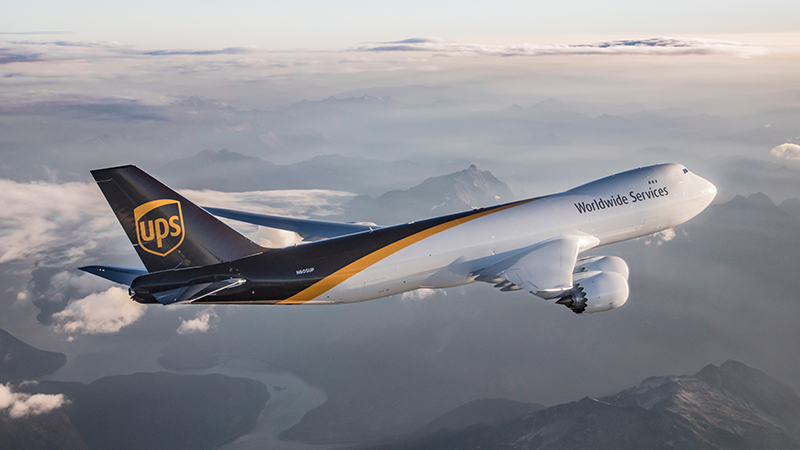
UPS is adding a new Mexico option to its North American air freight network as manufacturers look for faster ways to move parts across the region.
The company said May 29 that it has invested nearly $50 million in network capabilities and dedicated industry teams for automotive and industrial manufacturers. As part of that push, UPS plans to introduce time-definite heavy air freight service to and from Mexico for the first time under its North American Air Freight offering.
The service is scheduled to begin in August and will offer 1-, 2- and 3-day options, according to the company. UPS said the Mexico expansion is aimed at high-value, time-sensitive parts that can stall production when border delays or carrier handoffs add uncertainty.
For supply-chain teams, the news is less about another air lane and more about the continued buildout of North American manufacturing logistics. Automotive, aerospace, electronics and industrial companies have been adding regional capacity in Mexico and the U.S. as they try to shorten lead times and reduce exposure to longer overseas routes.
UPS is pitching the service as an integrated alternative to fragmented cross-border moves. The company said it combines transportation, brokerage and warehousing in one network, reducing handoffs and improving visibility from origin to destination.
The company also pointed to network upgrades already in place, including automation across 67.5% of UPS facilities and RFID sensing technology in its network. UPS said it has also built a dedicated automotive and industrial manufacturing team of more than 300 subject-matter experts.
The service will not remove all cross-border friction. Customs documentation, regulatory changes, labor availability and airport capacity still matter. But for manufacturers running lean inventories, a time-definite Mexico air-freight product gives logistics teams another way to protect production schedules when a part cannot wait for truckload or deferred freight.
UPS posted 2025 revenue of $88.7 billion and operates in more than 200 countries and territories. The company has been reshaping its network around higher-value logistics services as parcel markets mature and industrial customers ask for more tailored freight options.
Sources
- UPS / Business Wire release via Yahoo Finance — supports: May 29 announcement, nearly $50 million investment, Mexico North American Air Freight expansion, August launch timing, 1-, 2- and 3-day service options, automation and dedicated industry team details.
- UPS Supply Chain Solutions air freight page — supports: UPS air freight service context and customs brokerage positioning.
- Air Cargo News Google News listing — supports: independent industry-news pickup of UPS air-freight expansion. Direct article URL returned a 404 during verification, so do not rely on it for details beyond the headline unless checked manually.

The Untold Logistics of Running a Resort in Paradise (With Glenn Jampol)

DHL and USPS sign $10B-plus last-mile parcel agreement

FMC collects $1.9 million from Maersk over detention billing dispute

Accenture backs Aera as companies push AI into supply-chain decisions

Kuehne+Nagel and Hapag-Lloyd expand low-emission ocean-freight deal
